This month I am excited to host four documentaries on emerging social justice issues every Thursday at the University at Albany Campus Center Auditorium. I am the curator and coordinator of this series. It is exciting to imagine the conversations the films will start and I expect to garner a nice turnout to each screening. Some professors are offering extra credit opportunities to students attending, and some groups are participating in Q & A sessions, bringing the conversation right to the audience.
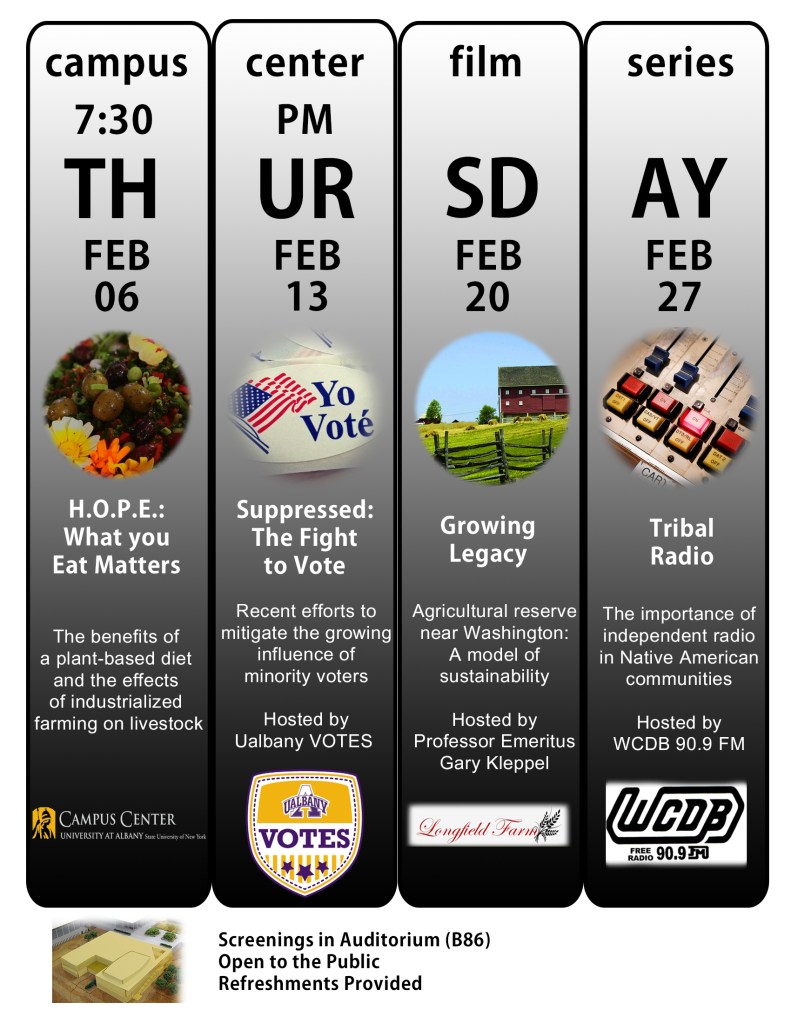
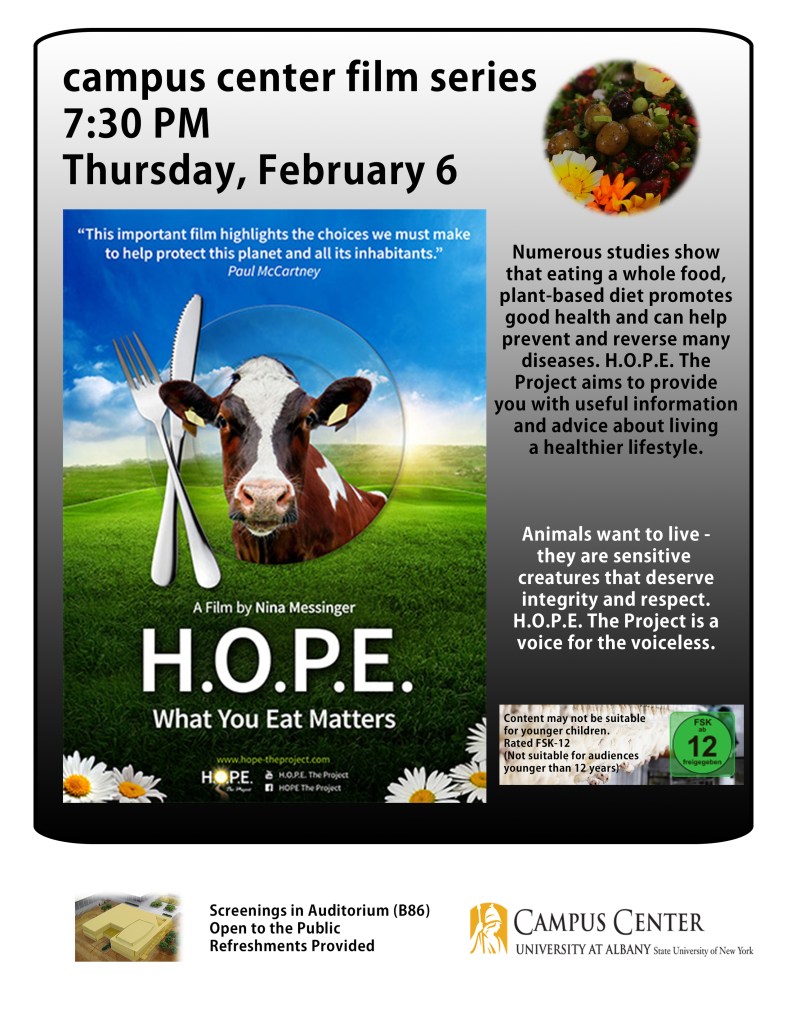
First up this Thursday February 6th is Nina Messinger’s fantastic depiction of the vegan diet and the terrible effects of industrial farming on animals and the environment in her documentary HOPE. I’m not totally on board when the vegan diet’s potential to reverse cancer diagnoses comes up, but I was floored to learn that only 2% of soybean production goes toward human consumption. 98% is used for feed for livestock. Worldwide vegetarianism? There goes world hunger…
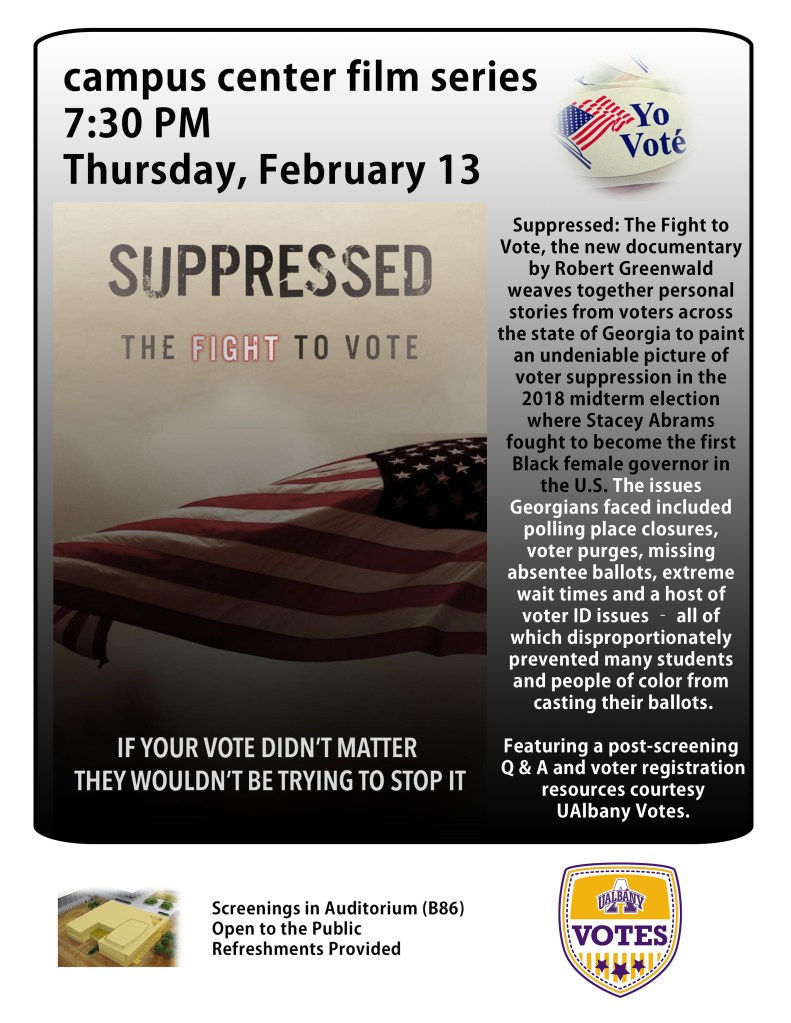
For Thursday, February 13th, Robert Greenwald’s “Suppressed: The Fight to Vote” is a presentation of questionable voting practices revealed as a surprise to many American residents in the weeks leading up to the 2018 elections. In a certain county in Georgia, seven of their nine polling places suddenly closed just before the election. This, along with a litany of other technicalities and ineligibility excuses, made the act of voting especially difficult for minority populations that year. The most difficult interview in this piece is with a U.S. Army officer who voted absentee twice during tours in Iraq and Afghanistan; after returning home, he became a victim of these voter eligibility issues and was left disenfranchised. It was easier for him to vote thousands of miles away than it was for him to return home, walk a few blocks and vote in his home town. Incredible.
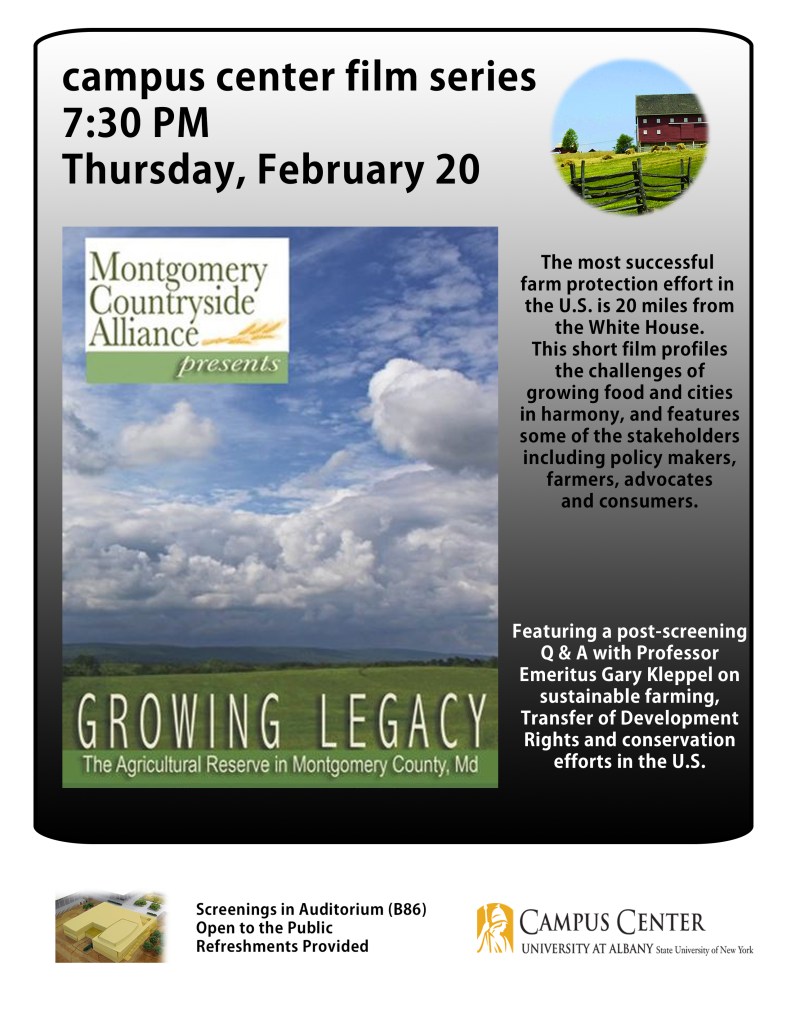
The series continues on February 20th with a documentary concerning the Montgomery County Ag Reserve in Maryland. This incredible experiment came about in the early 1980s when suburban life was beginning to threaten agricultural land. The decision was made to transfer development rights to a group of farmers who capitalized on the opportunity to use the land as it was historically intended. If not for the Reserve, it is easy to imagine the 1980s-90s commuter sprawl of Washington, DC overtaking this beautiful part of Maryland. This feature will be accompanied by a talk hosted by Professor Emeritus Gary Kleppel of Longfield Farm in Altamont, NY, who will discuss Right to Farm and Transfer of Development Rights.
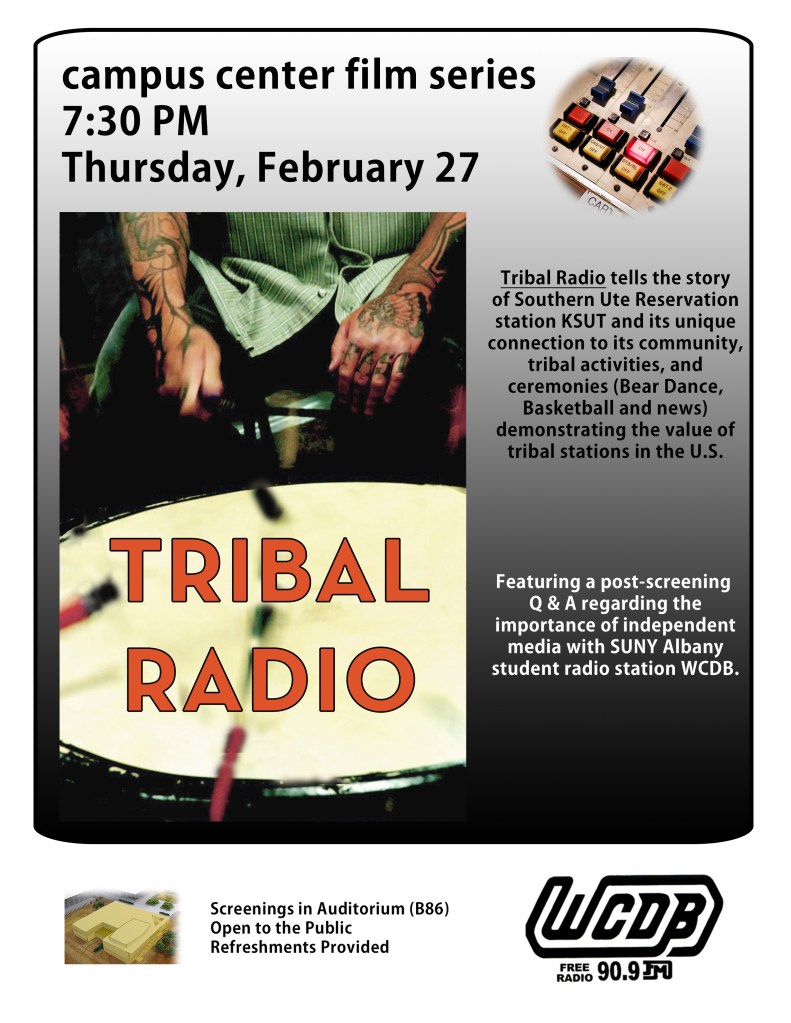
The series wraps up on February 27th with a screening of Tribal Radio, a deeply moving film about KSUT-FM. This radio station serves Native American populations of the Southern Ute reservation and helps maintain tradition and connection among the tribe. It also displays the cultural offerings of that group to anyone interested in tuning in. The power of noncommercial radio is so important to me and I feel very strongly for the proliferation of community-based media throughout our country. This feature will include an informal conversation on the importance of this phenomenon with board members of SUNYA’s student radio station WCDB Albany.
Thanks for reading – Hope to see you there!
Leon
 Leon Ferri