When you wake up in the morning and the sun hits your face, does anything else really matter?
We strive for perfection and evergreen appearance as a matter of course, but we know in our hearts and our minds achieving and keeping that will never be truly possible. The struggle between what we want and what we know outlives us, and dilutes our being. Kintsugi is a somewhat recent (15th century) Japanese term describing the ostentatious repair of lacquerware; to use elements like gold and broad staples, drawing attention to a fix rather than attempting to hide it. The celebration of use and brash acceptance of change relates to a broader philosophy of self-assertion that I deeply connect with.
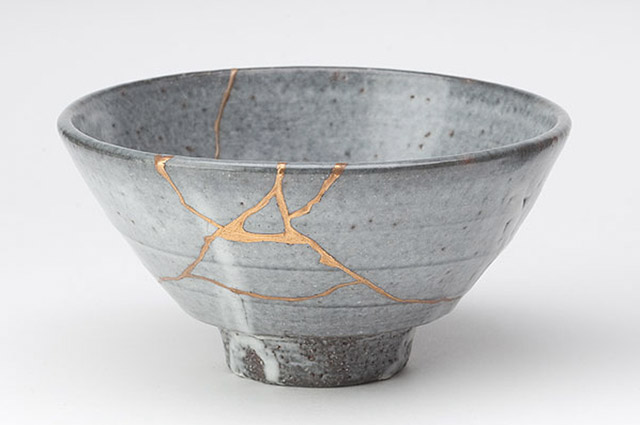
My car is now 13 years old (I have had it for over ten years.) I’m lately very interested in trading up to a new vehicle. The car has been mechanically taken care of and is working well, but on the outside it’s definitely showing its years – paint chips, scratches, a few dents, even some rust – and both bumpers riddled with the scars of parallel parking (only half of which are my fault.)
I have an idea – To scrape down all 20 or 25 scattered imperfections – To score them down with 80 grit, 120 grit, 240 grit – To primer the areas & feather them out an inch farther with 600, 800 grit – To spray a few coats with a vintage 60s/70s can of Krylon Gold Enamel (#1701, if anyone’s asking) – To remove the painter’s tape, compound it in, and consider it repaired. Maybe you wouldn’t immediately notice it parked on the street or driving down a highway – Ideally it would entice you to take a second look, to see beauty in the world’s hits and misses.
My main concern is that this artistic statement would affect the resale value of my car. This concern alone precludes my status as a legitimate follower of K’gi. I am not sure if I will ever have the gall to do it. But what a way to practice admiration; to thank the item for all it has afforded its keeper by celebrating its damages – to wallow in abject, dynamic complicity with an object’s story as it unfolds.
Leon
 Leon Ferri